

You share a drink with a friend, later hear they sometimes get cold sores, and begin wondering whether that single sip could cause an infection. If this has led you to search for oral herpes treatment in Indore, understanding how the virus spreads is a useful first step.
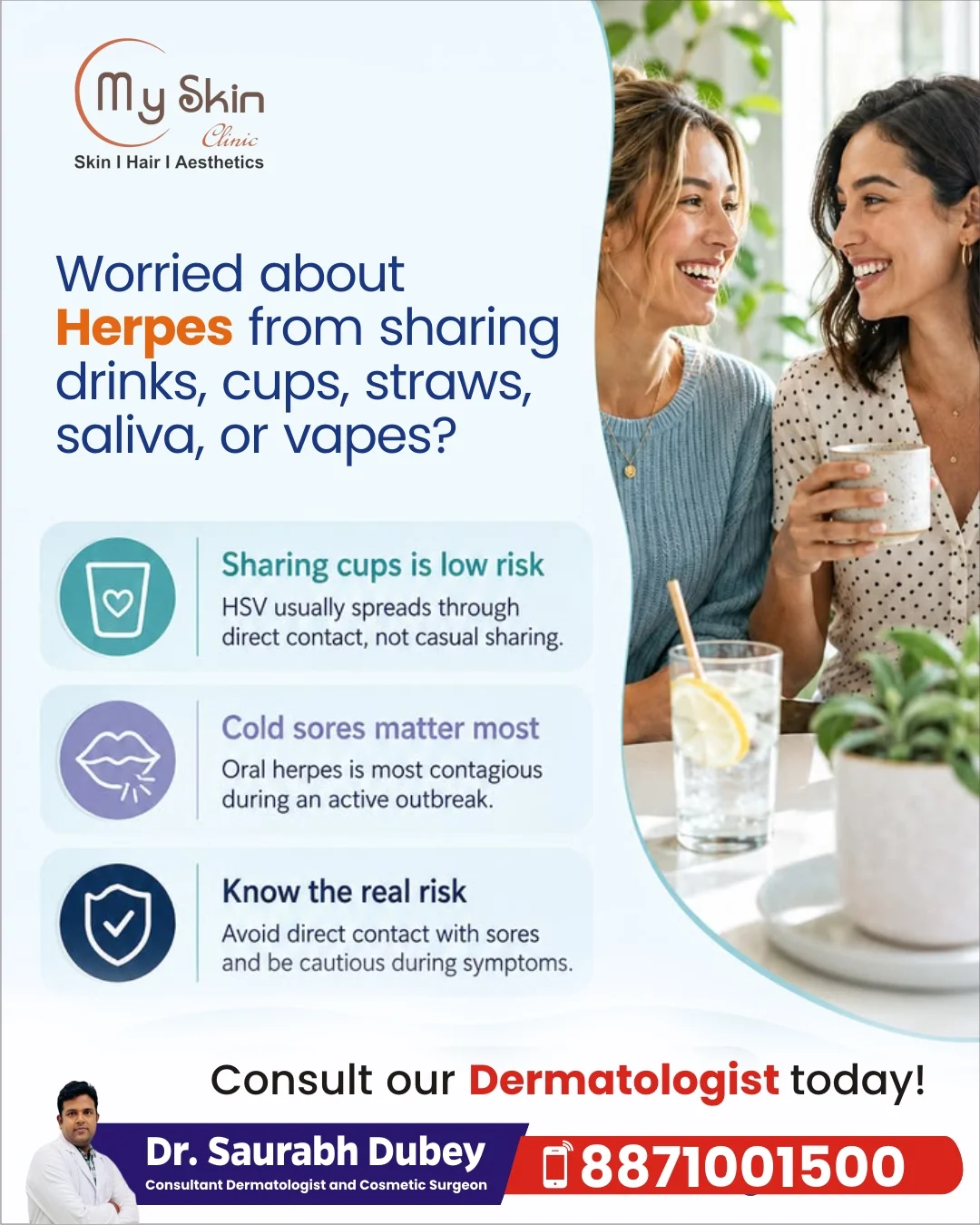
The herpes simplex virus spreads mainly through direct contact with infected oral skin, sores, or saliva. People with oral herpes symptoms should also avoid sharing items that touch saliva. Sharing a cup does not, by itself, establish that an infection has occurred.
For concerns about recurring lip blisters or an unfamiliar sore, My Skin Clinic offers a point of contact for discussing an appointment with Dr. Saurabh Dubey.
Transmission through a saliva-contaminated item is possible, particularly around an active cold sore. However, direct oral contact is the main route of HSV-1 transmission. A shared drink cannot tell you whether someone was shedding the virus or whether transmission took place.
The practical approach is to avoid sharing drinks, cups, straws, and similar items with someone who has symptoms. That precaution is useful without assuming that every shared sip leads to herpes.
If you are worried about a particular encounter, describe what happened to a healthcare professional rather than relying on an online percentage that may not apply to you.
Oral herpes commonly involves herpes simplex virus type 1, usually shortened to HSV-1. It can cause cold sores around the lips or mouth, although many people have no noticeable symptoms.
People often acquire oral HSV-1 during childhood or young adulthood through non-sexual contact. A cold sore is therefore not evidence of a recent sexual encounter, and it should not be used to make assumptions about someone’s relationships.
After infection, the virus can remain inactive and reactivate later. A new outbreak does not automatically mean a person has recently caught the virus from someone else.
Questions about herpes from sharing drinks often mix several situations together. Kissing someone with an active cold sore, borrowing lip balm, and accidentally using a friend’s cup are different encounters. They should not all be treated as proof of infection.
During symptoms, keep mouth-contact items personal. This includes drinking bottles, cutlery, straws, and lip products. The same precaution sensibly extends to a vape mouthpiece because it touches the mouth and can contact saliva.
For cups and utensils, wash them properly before another person uses them. Ordinary reusable dishes do not need to be thrown away because someone in the household has cold sores.
Knowing the precaution makes it easier to respond calmly: use your own items during an outbreak, maintain normal hygiene, and avoid drawing conclusions from a single incident.
The greatest transmission risk occurs when active sores are present. However, HSV-1 can sometimes spread when the oral area looks normal, so the absence of a visible blister does not guarantee that transmission is impossible.
Precautions should begin when familiar tingling or burning starts and continue until the cold sore has completely healed. Waiting for a blister to open misses part of the symptomatic period.
This is especially relevant if you recognise a recurring warning sensation in the same part of your lip. Treat that early signal as a reason to avoid close oral contact and shared mouth-contact items.
Cold sore symptoms can begin with local tingling, itching, or burning. Small fluid-filled blisters may follow, then break and crust as they heal.
Other conditions can also affect the mouth and surrounding skin. A mouth ulcer, spot, or bacterial skin infection can look different and need different care. A photograph found online cannot reliably settle which condition you have.
Arrange a consultation if the sore is unfamiliar, very painful, repeatedly returns, or has not started healing within about ten days. Mention painful gums or multiple sores inside the mouth as well.
Seek urgent assessment for eye pain, worsening redness, light sensitivity, or changes in vision. These symptoms need prompt attention rather than a routine appointment for a lip sore.
For a cold sore consultation in Indore, prepare a brief account of your symptoms: when they began, whether this has happened before, and what products or medicines you have used.
A clinician may diagnose oral herpes from the appearance and history. In some cases, a sample from a sore is sent for laboratory testing. If the lesion changes before the appointment, a clear photograph may help explain its earlier appearance.
Testing should answer a clinical question. Herpes blood tests have limitations, including the possibility of misleading results. Discuss whether a test is appropriate and what its result could actually establish before arranging one yourself.
Bring details of ongoing medicines and any condition that affects your immune system. Those facts can influence the assessment and treatment discussion.
Cold sore treatment may include antiviral medicine when appropriate. Treatment can help symptoms and healing, particularly when started early, but it does not remove the virus permanently from the body.
People with frequent or troublesome recurrences may need a different management plan from someone experiencing an occasional mild outbreak. Ask what to do at the first warning symptom and when to seek another review.
During an outbreak:
Do not kiss a newborn when you have a cold sore. Anyone with reduced immunity should seek medical advice promptly if symptoms develop, rather than assuming their usual self-care will be sufficient.
No. A shared cup does not establish infection. Avoid sharing saliva-contact items during symptoms, and seek an assessment if you develop a suspicious sore or need advice about your circumstances.
Yes. Transmission can sometimes happen when the skin around the mouth appears normal. Active sores carry the greatest risk, but visible symptoms are not present during every possible transmission.
No. HSV can stay inactive and cause an outbreak later. The appearance of a cold sore cannot, on its own, identify when the infection began or who passed it on.
Discuss the situation with a clinician first. Testing depends on symptoms and context, and blood tests have limitations. An unnecessary test can create confusion without answering the question you actually have.
Arrange a review and describe how often episodes occur, how painful they are, and how they affect eating or daily life. This helps guide a discussion about treatment for individual outbreaks or longer-term management.
If you need oral herpes treatment in Indore, contact My Skin Clinic to enquire about a consultation with Dr. Saurabh Dubey. Explain whether you have a current sore, repeated outbreaks, or a question about possible exposure.
Contact Us Today for a Cold Sore Assessment and Personalised Treatment Advice.
| Tags: | #Oral herpes treatment in Indore |


