

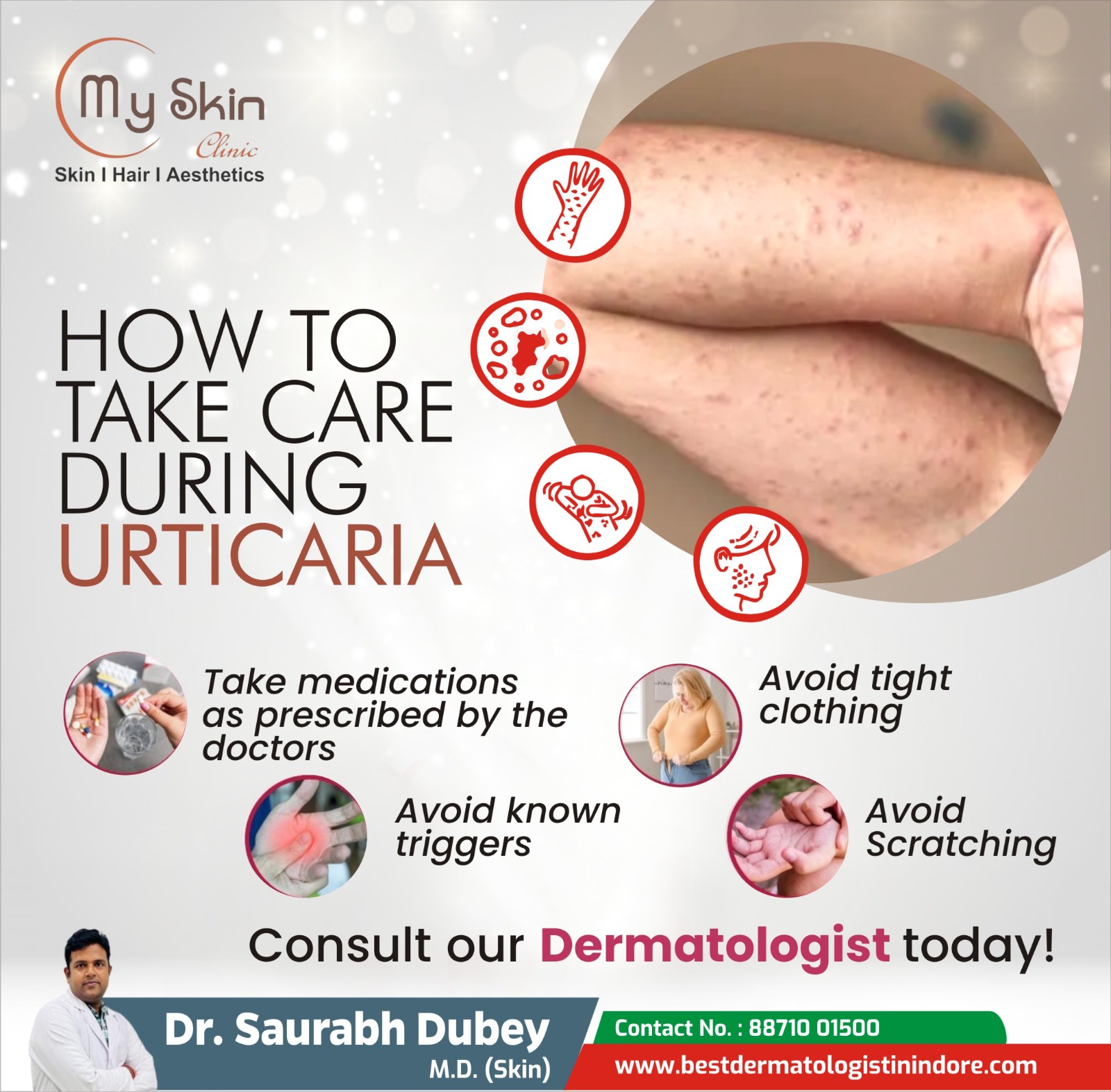
Urticaria, commonly known as hives, is a skin condition that causes raised, itchy, red or skin-coloured welts on different parts of the body. These rashes may appear suddenly, change shape, move from one area to another, and disappear within hours before appearing again elsewhere. For some people, urticaria lasts only a short time, while others experience repeated episodes for weeks or months.
People searching for the best Urticaria Treatment in Indore usually want relief from itching, swelling, recurrent rashes, and the uncertainty of not knowing what is triggering the problem. The right treatment begins with understanding the type of urticaria, possible triggers, severity, duration, and whether symptoms are associated with swelling of the lips, eyelids, hands, or other body parts.
At My Skin Clinic, Dr. Saurabh Dubey, patients can seek evaluation for recurrent hives, allergic skin reactions, itching, and other dermatological concerns.
What Is Urticaria?
Urticaria is a skin reaction that causes itchy, raised welts. These welts may be small or large and can merge together to form broader patches.
A typical urticaria rash may:
The condition can affect the face, arms, legs, back, chest, abdomen, or almost any part of the body.
People experiencing frequent episodes may benefit from consultation with a skin specialist in Indore.
Types of Urticaria
Understanding the type of urticaria is important because treatment and investigation may differ.
Acute Urticaria
Acute urticaria usually lasts for less than six weeks.
It may sometimes be associated with:
In many cases, the exact trigger may not be obvious.
Chronic Urticaria
When urticaria continues or repeatedly returns for more than six weeks, it is generally considered chronic.
People searching for chronic urticaria treatment in Indore may experience recurring itching and welts without a clear everyday trigger.
Chronic urticaria may be spontaneous or related to physical triggers.
Physical Urticaria
Some people develop hives after exposure to specific physical factors such as:
Identifying these triggers can help in management.
Common Symptoms of Urticaria
The most common symptom is an itchy raised rash.
Other signs may include:
Some people may also develop angioedema, which involves deeper swelling beneath the skin.
When Is Urticaria an Emergency?
Most urticaria episodes are uncomfortable but not life-threatening. However, urgent medical attention is required if hives occur with signs of a severe allergic reaction.
Seek emergency care if there is:
These symptoms may indicate a serious allergic reaction and should not be managed only at home.
What Causes Urticaria?
Urticaria develops when certain cells in the skin release histamine and other chemicals.
Possible triggers may include:
Food
Some individuals may develop hives after particular foods, although chronic urticaria is not always caused by food allergy.
Medicines
Certain medications can trigger urticaria in susceptible people.
Infections
Viral or bacterial infections can sometimes be associated with acute hives.
Insect Bites
Insect bites or stings may trigger allergic skin reactions.
Temperature Changes
Cold air, hot weather, hot showers, or sudden temperature changes can trigger symptoms in some individuals.
Stress
Stress does not always directly cause urticaria, but it may worsen symptoms in certain people.
Pressure on the Skin
Tight clothing, prolonged sitting, or pressure from bags or straps may trigger physical urticaria in some cases.
Why Does Chronic Urticaria Keep Coming Back?
This is one of the most common questions people ask when looking for urticaria treatment in Indore.
Chronic urticaria may continue even when no clear external allergy is identified. In many patients, the immune system may play a role in repeated histamine release.
This is why searching endlessly for one specific food trigger may not always provide an answer.
A dermatologist evaluates the pattern of symptoms and decides whether additional testing is actually required.
How Is Urticaria Diagnosed?
Diagnosis usually begins with a detailed clinical history and examination.
A dermatologist may ask:
In many cases, the appearance and pattern of the rash provide important diagnostic information.
Are Blood Tests Always Needed?
Not every person with urticaria requires extensive allergy testing.
For acute urticaria with a clear history, tests may not always be necessary.
For persistent or unusual symptoms, a dermatologist in Indore may recommend selected investigations based on clinical findings.
Testing should be guided by symptoms rather than performed randomly.
Treatment Options for Urticaria
Treatment depends on the type, severity, and duration of symptoms.
Antihistamines
Non-sedating antihistamines are commonly used to control itching and welts.
They work by reducing the effect of histamine, which plays a major role in urticaria.
The medicine and dosage should be decided by a doctor, especially in persistent cases.
Trigger Avoidance
If a specific trigger is clearly identified, reducing exposure can help prevent episodes.
Possible measures may include:
Advanced Treatment for Chronic Cases
Some patients with chronic urticaria may not respond adequately to standard treatment.
A dermatologist may consider other treatment approaches depending on the severity and clinical response.
This is why people with persistent symptoms should seek proper medical supervision rather than repeatedly changing medicines themselves.
Why Self-Medication Can Be a Problem
Many people with recurrent hives repeatedly take over-the-counter medicines without medical guidance.
This can be problematic because:
Professional urticaria treatment in Indore focuses on long-term control rather than simply suppressing each episode temporarily.
Lifestyle Tips for Managing Urticaria
Along with medical treatment, simple lifestyle changes may reduce discomfort.
Avoid Excessive Heat
Hot showers, overheating, and sweating may worsen itching in some patients.
Wear Loose Clothing
Tight clothing can increase pressure and friction on sensitive skin.
Avoid Scratching
Scratching can worsen irritation and make the rash feel more intense.
Use Gentle Skin Products
Strong fragrances or harsh products may irritate sensitive skin.
Maintain a Symptom Diary
Writing down foods, medicines, activities, and symptoms may help identify consistent patterns.
Manage Stress
Relaxation, regular sleep, and physical activity may help reduce stress-related worsening.
Urticaria and Food Allergy: Are They Always Connected?
No. This is a common misconception.
Some cases of acute urticaria may be triggered by food allergy, but chronic urticaria is often not caused by a single food.
Unnecessary food restrictions can make the diet difficult and nutritionally unbalanced.
Food avoidance should be based on a clear, repeatable relationship or medical advice.
Urticaria in Children
Children can also develop acute or recurrent hives.
Infections are a common trigger in younger patients.
Parents should seek medical advice if the child has:
Treatment in children should be based on age, weight, and medical assessment.
Urticaria During Pregnancy
Pregnant women experiencing urticaria should discuss treatment with a doctor because medicine selection needs additional care.
Not every antihistamine or treatment is suitable for every stage of pregnancy.
A qualified doctor can recommend a safer and more appropriate treatment strategy.
How to Choose the Best Dermatologist for Urticaria
When looking for the best Urticaria Treatment in Indore, consider a few important factors.
Accurate Diagnosis
The first step should be confirming whether the rash is actually urticaria.
Detailed History
A good dermatologist evaluates duration, frequency, triggers, and associated symptoms.
Evidence-Based Treatment
Management should follow the pattern and severity of the condition.
Avoiding Unnecessary Tests
Tests should be selected when clinically relevant rather than ordered routinely for every patient.
Follow-Up Plan
Chronic urticaria may require treatment adjustment depending on response.
Frequently Asked Questions
Is urticaria contagious?
No. Urticaria itself is not contagious and does not spread from one person to another through touch.
Can urticaria be permanently cured?
Acute urticaria often resolves completely. Chronic urticaria may persist for a period of time, but symptoms can usually be controlled with appropriate treatment. The course varies from person to person.
Does stress worsen urticaria?
Stress may worsen itching or increase symptom frequency in some people, although it may not be the primary cause.
Should I get an allergy test for urticaria?
Not everyone needs allergy testing. The need for tests depends on the pattern of symptoms, suspected triggers, and medical history.
Get the Best Urticaria Treatment in Indore
Repeated hives can be uncomfortable, distracting, and frustrating, particularly when the trigger is unclear. Instead of relying on repeated self-medication or unnecessary dietary restrictions, proper dermatological assessment can help determine the type of urticaria and create a suitable treatment plan.
If you are searching for the best Urticaria Treatment in Indore, My Skin Clinic, Dr. Saurabh Dubey provides evaluation and management for urticaria, itching, allergic skin reactions, and other dermatological conditions.
Contact Us Today to schedule a skin consultation and get personalised guidance for managing recurrent urticaria.
| Tags: | #Best Urticaria Treatment in Indore |


