

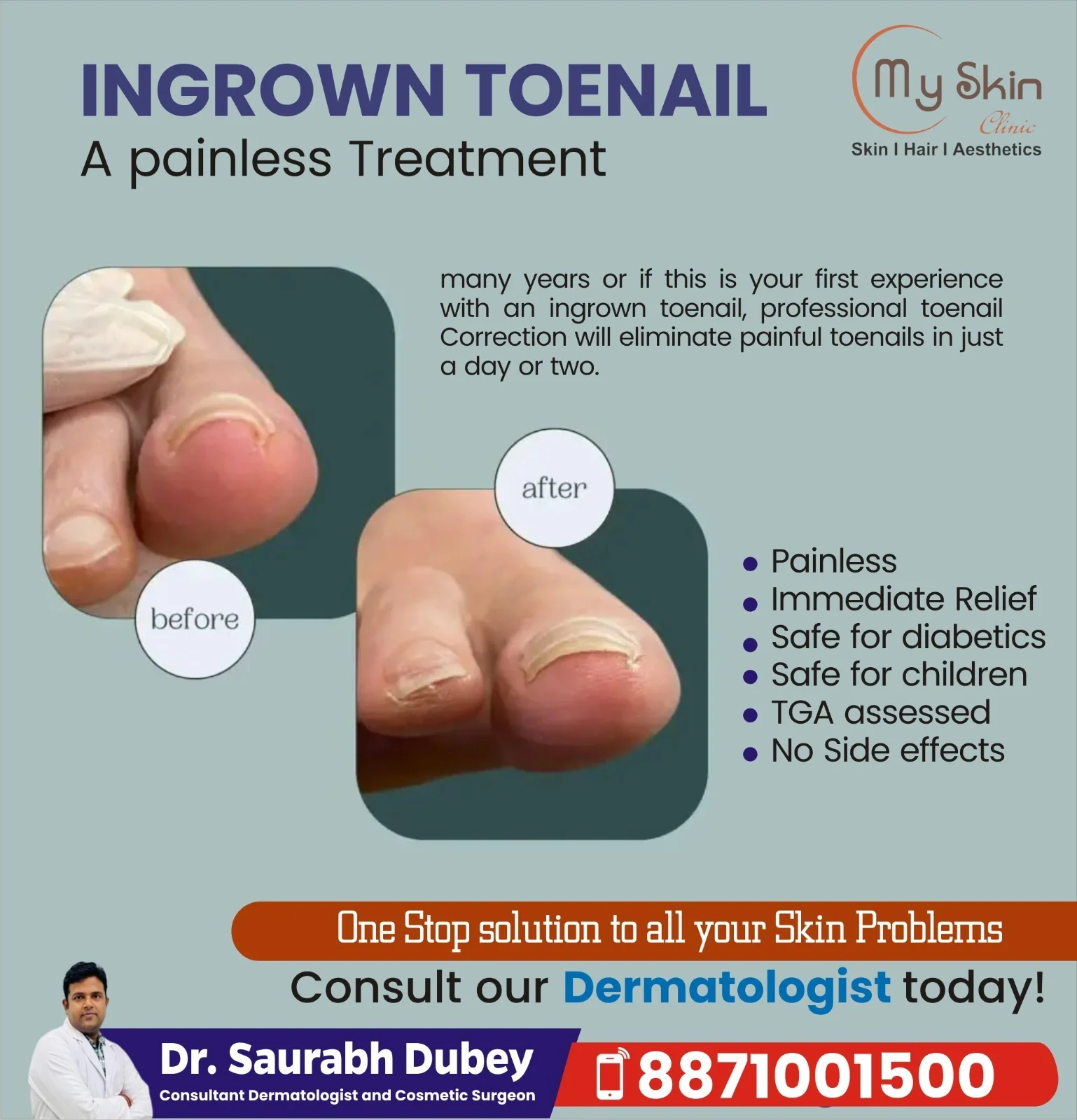
Ingrown Toenail Treatment in Indore for Pain, Swelling and Nail Infection
An ingrown toenail may begin as mild tenderness along the edge of a toe, but the discomfort can quickly interfere with walking, exercise, footwear and everyday work. As the nail continues pressing into the surrounding skin, the area may become red, swollen, painful or infected.
Although an ingrown nail most commonly affects the big toe, it can develop on other toes as well. Early attention is important because repeated cutting, digging into the nail edge or ignoring infection may worsen the condition. People seeking professional Ingrown Toenail Treatment in Indore should consult a qualified dermatologist for an accurate diagnosis and treatment plan based on the severity of the problem.
At My Skin Clinic, Dr. Saurabh Dubey provides evaluation and treatment for ingrown toenails and other skin, hair and nail concerns.
What Is an Ingrown Toenail?
An ingrown toenail develops when the side or corner of the nail grows into the adjacent skin. This pressure can cause inflammation, tenderness, swelling and sometimes infection. The condition is medically known as onychocryptosis and most frequently involves the big toe.
The problem may affect one side or both sides of the nail. In mild cases, the area may feel tender only when pressure is applied. As the condition progresses, pain may become persistent, and extra tissue may develop around the nail border.
What Are the Symptoms of an Ingrown Toenail?
The symptoms can vary according to the stage and whether an infection is present.
Common signs include:
Pain, inflammation, swelling and occasional infection are recognised features of an ingrown toenail. Pus, increased warmth and worsening redness may indicate that infection has developed.
Anyone noticing recurring pain or signs of infection should consider consulting an ingrown toenail specialist in Indore instead of repeatedly trying to cut the embedded portion at home.
What Causes Ingrown Toenails?
Several factors may cause or contribute to the nail growing into the surrounding skin.
Incorrect Nail Cutting
Cutting toenails too short or rounding the corners can encourage the nail edge to grow into the nearby skin. Toenails should generally be trimmed straight across rather than curved deeply at the sides.
Tight or Narrow Footwear
Shoes with a small toe box can place continuous pressure on the nail and surrounding tissue. Tight socks may also aggravate an already sensitive nail edge.
Toe Injury
Stubbing the toe, dropping an object on the foot, repeated sports-related impact or another injury may change the way the nail grows.
Natural Nail Shape
Some people have naturally curved, wide or thick toenails that are more likely to press against the skin.
Improper Pedicure Practices
Cutting deeply into the nail corners, using unclean tools or aggressively removing the surrounding skin may increase irritation and infection risk.
Repetitive Pressure
Running, football, dancing and occupations involving prolonged standing may repeatedly place pressure on the toes.
Excessive Sweating
Moist skin around the nail may become softer and more vulnerable to irritation from the nail edge.
Who Is More Likely to Develop This Condition?
An ingrown toenail can affect anyone, but it may be more common among:
Those with diabetes or circulation problems should not attempt aggressive home treatment. Foot infections may become more serious in these situations, making timely medical assessment especially important.
How Is an Ingrown Toenail Diagnosed?
Diagnosis is usually based on the appearance of the nail and the patient’s symptoms. A dermatologist may examine:
Laboratory tests are not routinely necessary for a straightforward ingrown toenail. Additional testing may be considered when another nail disorder, unusual infection or underlying medical concern is suspected.
Treatment Options for an Ingrown Toenail
The appropriate ingrown toenail treatment in Indore depends on whether the problem is mild, infected, recurrent or causing substantial tissue growth.
Conservative Care for Mild Cases
Early-stage cases may improve with measures that reduce pressure and protect the area. A doctor may advise suitable foot hygiene, roomier footwear and careful monitoring.
Warm-water soaking is commonly recommended for mild cases because it may soften the surrounding skin and reduce tenderness. The foot should be dried thoroughly afterward.
Patients should avoid:
Home measures should not delay medical consultation when pain, swelling or infection is worsening.
Lifting or Correcting the Nail Edge
In selected mild cases, a clinician may gently separate the nail edge from the skin using an appropriate technique. The objective is to guide the nail above the skin border while the toe heals.
This should be performed or advised by a healthcare professional because incorrect placement of material under an inflamed nail may increase pain or introduce infection.
Treatment of Infection
When the surrounding skin is infected, treatment is selected according to the examination findings. The dermatologist may clean the affected area, manage the embedded nail edge and prescribe medication when clinically appropriate.
Antibiotics are not automatically required for every ingrown toenail. They may be considered when there is evidence of spreading bacterial infection or another medical reason.
Partial Nail Removal
Persistent, painful or recurring ingrown toenails may require removal of the section of nail that is pressing into the skin. This is commonly performed as a minor procedure after numbing the toe with local anaesthesia.
Only the affected border may need removal; the complete nail does not necessarily have to be taken off. Nail surgery is commonly used to relieve discomfort by removing the problematic section, and treatment of the nail root may be considered to reduce regrowth in recurrent cases.
Nail Matrix Treatment
When the same nail edge repeatedly becomes ingrown, the doctor may recommend treating part of the nail-producing tissue. This helps prevent the troublesome side of the nail from growing back.
The decision depends on factors such as:
The doctor should explain the expected nail appearance, aftercare and possible risks before the procedure.
Is Ingrown Toenail Treatment Painless?
The claim that every treatment is completely painless would be unrealistic. Mild examination or conservative correction may cause little discomfort, while a procedural treatment is generally performed after local anaesthetic is given to numb the toe.
The anaesthetic injection may cause temporary stinging. Once the area is numb, the patient should not feel sharp pain during the procedure, although pressure or movement may still be noticed.
Pain levels and recovery experiences differ between patients. A responsible dermatologist for ingrown toenail in Indore should explain what to expect instead of making absolute promises.
Aftercare Following a Nail Procedure
Proper aftercare supports healing and reduces unnecessary irritation.
Patients may be advised to:
After nail removal, healthcare guidance may include resting and elevating the toe for a short period and avoiding activities that cause pain while healing occurs.
Recovery time depends on the procedure, the condition of the toe, infection status and individual healing.
When Should You See a Dermatologist?
Book an appointment when:
An infected toe accompanied by fever, chills, spreading redness or severe pain requires prompt medical attention.
How to Prevent Ingrown Toenails
Preventive nail care can reduce the likelihood of recurrence.
Trim Toenails Straight Across
Avoid rounding the side edges deeply. Leave the nail long enough so that its corners remain visible above the surrounding skin.
Wear Correctly Fitting Shoes
Choose footwear with enough space for the toes to move. Avoid shoes that continuously squeeze the front of the foot.
Keep Feet Clean and Dry
Wash the feet regularly and dry carefully around the toes. Change damp socks after exercise or prolonged activity.
Avoid Pulling Nail Corners
Use a clean nail clipper rather than tearing or peeling the nail.
Protect the Feet
Wear appropriate footwear during sports, industrial work and other activities that may injure the toes.
Seek Help With Difficult Nails
People with thick nails, reduced flexibility, diabetes or poor circulation should seek professional help rather than using sharp instruments at home.
Ingrown Toenail Treatment Near You in Indore
People searching for ingrown toenail treatment near me in Indore, toenail infection treatment in Indore or a nail specialist in Indore should consider the doctor’s clinical qualifications, hygiene standards, diagnostic approach and availability of minor procedural care.
Dr. Saurabh Dubey provides dermatology consultation for nail problems, skin conditions, hair concerns and aesthetic treatments. At My Skin Clinic, patients can receive an examination-based treatment plan rather than relying on temporary self-care or unverified remedies.
Frequently Asked Questions
1. Can an ingrown toenail heal without surgery?
A mild, early-stage ingrown toenail may improve with proper care and reduced pressure. Recurrent, severely painful or infected cases may need a minor procedure.
2. Should I cut out the painful nail corner myself?
No. Digging or cutting deeply into the corner may injure the skin, leave a sharp nail spike and increase the risk of infection.
3. Can an ingrown toenail return after treatment?
Yes, recurrence is possible, particularly when the nail is repeatedly cut incorrectly or has a naturally curved shape. Treatment of part of the nail root may be considered for repeated cases.
4. Is an ingrown toenail dangerous for someone with diabetes?
It can be more concerning because diabetes may be associated with slower healing, reduced sensation or circulation problems. Medical assessment should be arranged promptly rather than attempting aggressive home care.
Consult an Ingrown Toenail Specialist in Indore
Do not wait for a tender nail edge to develop into increasing pain, swelling, bleeding or infection. Timely evaluation can determine whether the condition requires simple conservative care, nail correction or a minor medical procedure.
Choose professional Ingrown Toenail Treatment in Indore with Dr. Saurabh Dubey for accurate assessment and an individualised care plan. Contact Us today to schedule your consultation and take the right step toward healthier, more comfortable feet.
| Tags: | #Ingrown Toenail Treatment in Indore |


