
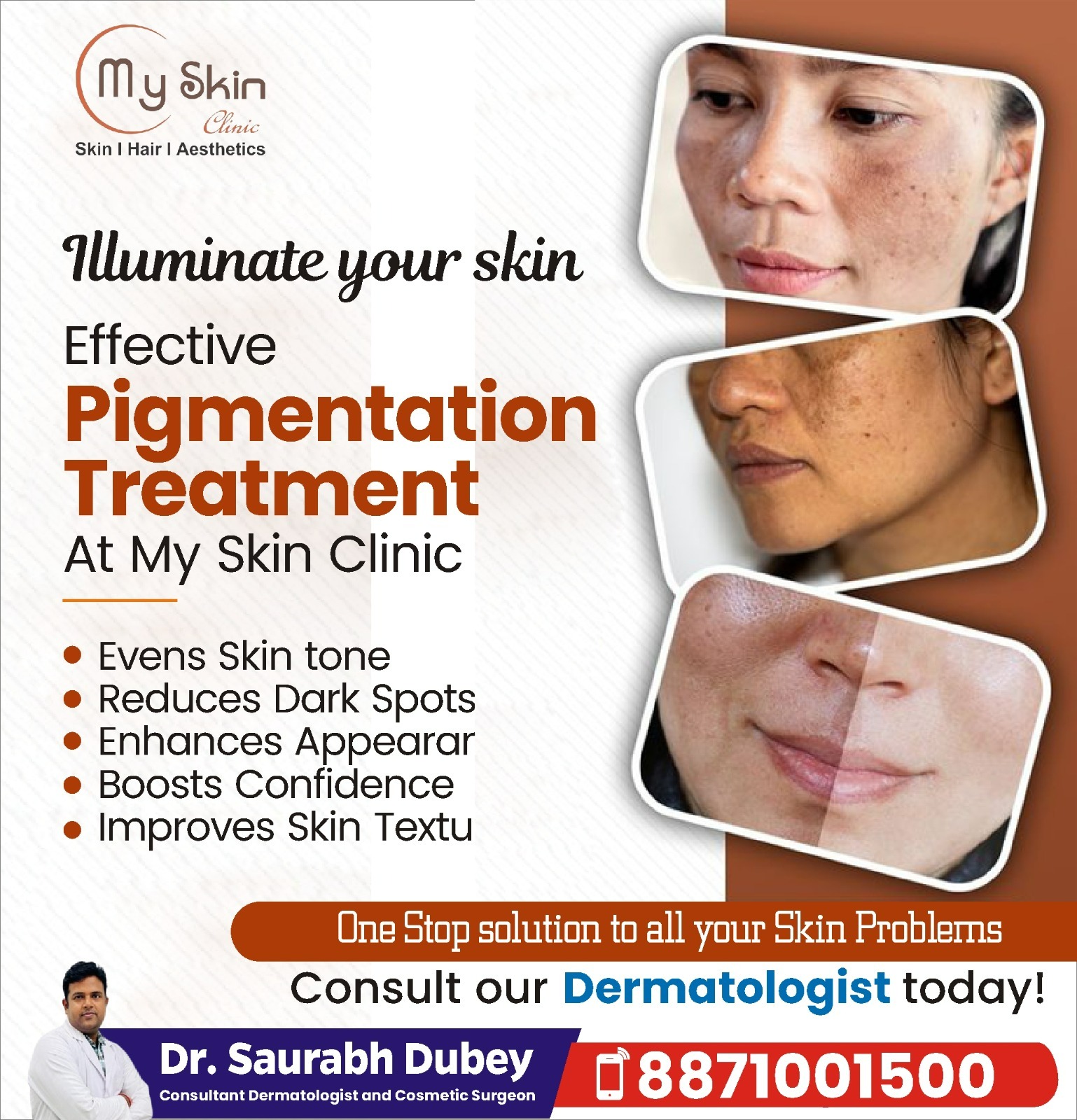
Pigmentation Treatment in Indore for Clearer and More Even-Looking Skin
Pigmentation can appear as dark spots, uneven patches, sun marks, acne-related discolouration or deeper areas of brown and grey skin tone. Although these changes are usually not physically painful, they may affect confidence and make the skin look dull or uneven. Random home remedies and unsuitable cosmetic products can sometimes irritate the skin further, which is why understanding the cause is important before beginning treatment.
People seeking professional Pigmentation Treatment in Indore can consult mySkin Clinic – Dr. Saurabh Dubey for a detailed skin assessment and a personalised care plan based on the type, depth and possible cause of the pigmentation.
Skin receives its natural colour from a pigment called melanin. It is produced by specialised cells and helps protect the skin from ultraviolet exposure. When melanin production becomes uneven or excessive in certain areas, visible dark patches may appear.
Pigmentation may be superficial, affecting the upper layers of the skin, or deeper, involving lower skin layers. Its colour can range from light brown to dark brown, grey or bluish, depending on its depth and cause.
Professional skin pigmentation treatment in Indore begins by identifying whether the marks are associated with sun exposure, acne, hormonal changes, inflammation, ageing, medicines or another factor.
Not every dark patch is the same. Different pigmentation concerns may require different treatment approaches.
Melasma commonly appears as symmetrical brown or grey-brown patches on the cheeks, forehead, upper lip, nose or jawline. It may be influenced by sun exposure, hormones, pregnancy, family history and heat.
Melasma can be persistent and may return even after improvement. Long-term sun protection and regular follow-up are therefore important parts of its management.
Dark marks may remain after acne, irritation, burns, insect bites, eczema or other inflammatory skin problems. This is known as post-inflammatory hyperpigmentation.
People with medium to deeper skin tones may notice these marks more clearly. Picking acne or repeatedly scratching the skin can increase the likelihood of persistent pigmentation.
Sunspots are usually flat brown marks that develop after repeated ultraviolet exposure. They frequently appear on the face, hands, shoulders and other exposed areas.
Although many sunspots are harmless, any mark that changes colour, shape, size or texture should be examined by a dermatologist.
Freckles are small brown spots that may become darker with sun exposure. They are often influenced by genetics and are commonly seen on the face, arms and shoulders.
Red, brown or grey marks can remain after pimples heal. These marks are different from indented or raised acne scars. A dermatologist can assess whether the concern is pigmentation, scarring or a combination of both.
Discolouration around the lips and mouth may be associated with irritation, repeated friction, unsuitable cosmetics, lip licking, sun exposure, inflammation or nutritional and hormonal factors.
Since the area is sensitive, strong bleaching creams or unsupervised chemical products should be avoided.
Pigmentation usually develops due to one or more triggers rather than a single universal cause.
Common factors include:
During a pigmentation consultation in Indore, the dermatologist may ask when the marks first appeared, whether they are changing and which products or treatments have already been used.
Dark patches may look similar but have different causes. Treating every brown mark with the same cream may not provide the expected improvement.
A dermatologist may assess:
Accurate assessment helps determine whether the pigmentation is superficial, deeper or mixed. It also allows the treatment plan to focus on the trigger, not only the visible colour.
Professional evaluation may be helpful when:
A timely dermatologist consultation in Indore can help prevent repeated product experimentation and avoid unnecessary skin damage.
The most suitable approach depends on the pigmentation type, depth, skin sensitivity and underlying trigger. Treatment may involve one method or a planned combination.
Dermatologists may recommend creams or serums containing ingredients that help regulate pigment formation and support skin renewal. The choice and strength should match the individual’s skin type.
Products used incorrectly can cause redness, dryness, sensitivity or rebound pigmentation. They should therefore be applied according to medical instructions.
Chemical peels use controlled solutions to exfoliate selected skin layers. They may be considered for superficial pigmentation, sun damage, mild acne marks and uneven skin tone.
The type and intensity of the peel should be chosen carefully. Stronger is not always better, particularly for sensitive or pigmentation-prone skin.
Certain laser and light-based technologies may be used for selected pigmentation concerns. The suitability of a procedure depends on the type of pigment, skin tone and risk of post-treatment darkening.
Laser treatment should not be treated as a universal or instant solution. A dermatologist may recommend test assessment, preparation and strict aftercare.
Some patients may benefit from professionally supervised procedures designed to support exfoliation, hydration and brighter-looking skin. These should complement medical treatment rather than replace diagnosis.
When pigmentation is caused by active acne, controlling new breakouts is essential. Treating only the dark marks while pimples continue to develop may produce limited results.
Daily sun protection is one of the most important parts of pigmentation care. Without it, dark spots may deepen and treatment results may not last.
Pigmentation generally improves gradually. The required time depends on:
Superficial marks may respond earlier than deeper pigmentation. Melasma and recurring pigmentation often require longer management and ongoing maintenance.
Patients should be cautious of promises offering complete removal in one session. Improvement should be monitored realistically through photographs, clinical evaluation and regular follow-ups.
A simple and consistent routine is usually more helpful than using many active products together.
Apply a broad-spectrum sunscreen suitable for your skin type. Reapplication may be necessary during prolonged outdoor exposure, sweating or travel.
Squeezing pimples, scratching irritated areas or peeling scabs can increase inflammation and leave darker marks.
Harsh scrubs and strong soaps may damage the skin barrier. Choose a gentle cleanser recommended for your skin type.
Using multiple acids, retinoids or brightening products together can trigger irritation. Add new products only with proper guidance.
Heat can worsen certain pigmentation conditions. Avoid prolonged exposure to direct heat sources where possible.
Use prescribed products in the recommended amount. Applying more product does not necessarily produce faster results.
A suitable moisturiser supports the skin barrier and may improve tolerance to active treatment products.
Many pigmentation concerns become more difficult to manage because of unsafe self-treatment.
Avoid:
Temporary brightness after aggressive exfoliation does not always indicate healthy improvement. Irritation can later produce more noticeable pigmentation.
Skin tone and sensitivity influence how a person responds to creams and procedures. Deeper skin tones may have a greater risk of post-inflammatory darkening after irritation.
A personalised hyperpigmentation treatment in Indore should consider:
This helps reduce the risk of over-treatment and supports gradual, skin-safe improvement.
People searching for a pigmentation specialist near me in Indore may seek consultation from areas including Vijay Nagar, Palasia, Bengali Square, Nipania, Mahalaxmi Nagar, Pipliyahana, Khajrana, Kanadia Road, Scheme No. 54, Scheme No. 78, LIG, Bhawarkuan, Rau and nearby localities.
Choosing an accessible skin clinic in Indore can make follow-up visits easier, particularly when the treatment plan includes prescription review, procedures or progress monitoring.
Some marks may improve significantly, while conditions such as melasma can return due to hormones, sunlight or heat. Long-term maintenance and sun protection may be needed.
No. The suitability of laser treatment depends on the pigmentation type, depth and skin tone. Some concerns respond better to creams, peels or combined treatment.
Inflammation caused by acne can stimulate excess melanin production. Picking or squeezing pimples can make the resulting marks deeper and more persistent.
Visible improvement may take several weeks or longer. The timeline varies according to the condition, treatment plan and consistency of skin care.
Uneven skin tone, acne marks, melasma and persistent dark spots should be treated according to their cause rather than covered with random products. Early dermatological assessment can help identify the pigmentation pattern and create a realistic plan for clearer, healthier-looking skin.
For personalised Pigmentation Treatment in Indore, schedule a consultation with mySkin Clinic – Dr. Saurabh Dubey. Receive an individual skin evaluation and a carefully planned approach based on your pigmentation concern.
Contact Us Today to Book Your Dermatology Appointment in Indore.
| Tags: | #Pigmentation Treatment in Indore |


